


A STORY WITH SPIRIT…
and the four steps to optimal equine wellness.

FROM THIS

TO THIS
Spirit was rescued from a dire situation at the age of 18 months. He was weak, riddled with worms and his prognosis was bleak. He seemed to recover and blossomed into a strapping youngster full of life and attitude. At the age of four, he was started as a riding horse but there were intermittent issues like difficulty with saddle fitting, irritability, back pain, neck pain, head pain, and unwillingness to canter. One minute he was a sweetheart the next it seemed like he wanted to kill me. I knew that I had to help him or I was going to get hurt.
I searched for more than 4 years, every vet and practitioner in our remote B.C. community and beyond — it was exhausting. I finally found the amazing and highly trained DVM and Equine Osteopath Dr. Laura Taylor. With desperation and a lot of hope, I drove Spirit to Calgary, Alberta to see what she could do. Many of the professionals I saw said there was nothing wrong with him but Dr. Taylor saw something completely different.

OSTEOPATHIC ASSESSMENT & TREATMENT
“Osteopathy is a system of medicine based on manual manipulation of the body to alleviate pain, restore freedom of movement and enhance the body’s innate healing abilities. Initially, it may look a lot like chiropractic however osteopathy also looks at WHY an area of the body has reduced mobility….often there is an internal cause of external fixation patterns in joints of the horse.” — Laura Taylor, DVM
Osteopathic evaluation reveals things like organs/visceral imbalances like verminous arteritis, gastric ulcers, colonic ulcers, hind-gut acidosis (read the fact sheet), ovarian adhesions or gelding adhesions and/or dental impingements, and more. All of this will impact the horse’s movement and responses to mechanical treatment modalities. By this I mean that your chiropractor will be coming — as often as you can afford, and be repeating the same adjustments — if the organ/visceral cause are not corrected.
GETTING THE GUT RIGHT
This intervention in itself can prove to be challenging. The debate continues about the diagnosis and presence of gastric/colonic ulcers and the feeding strategies to manage and prevent. The use of digestive enzymes, probiotics and yeast, and buffering agents are extremely valuable. Dr. Taylor uses osteopathic patterns to evaluate the presence of imbalances in the foregut, duodenum and hind-gut. In her experience, the interventions depend upon the fixations that she reveals upon osteopathic evaluation. The goal would be to eliminate negative digestive practices and restore optimal function to the organs.
Equine Choice Prebiotic+Probiotic (made in Canada) and Kentucky Equine Research’s Equishure are the go-to products that Dr. Taylor recommends and that we’ve successfully used in conjunction with her treatments.

TREAT VERMINOUS ARTERITIS
Also known as ‘Worm Aneurysm’
Verminous arteritis (VA) is an inflammatory process that occurs in the mesenteric artery due to large strongyle larval migration; their presence incites the immune system to respond, causing inflammation and eventual thickening of the artery wall. They migrate back into the digestive system where they become mature strongyle worms. It is these larvae that reside outside the digestive system (untouchable to single-dose dewormers). Left untreated these larvae can lead to Verminous Arteritis’ or Worm Aneurysm which is a term used to describe the more advanced stage of dilation of the mesenteric artery which leads to bulging of the outer layer of the artery. Sudden death in horses from a ruptured mesenteric artery or thromboembolic colic was very common decades ago.
Treatment of this condition requires the use of several different types of dewormer in a strategic and timely use so that the life cycle and migratory cycle of the parasite can be properly targeted. Dr. Taylor recommends this protocol before she see’s the horse and so I did this before heading to Calgary with Spirit. READ MORE

APPROPRIATE DENTISTRY
This intervention may be the most important.
Osteopathically, 3 point balance dentistry sets up the equine for optimal whole-body balance. Many will argue the incisor reductions done in a three-point balance are unnecessary, however, horses nip their fodder as a means to self maintain the size of their incisors. Since we do not provide enough access to appropriate, natural fodder incisor length is not adequately managed and MUST be addressed skillfully. Optimal balance in the jaw has big influences on the musculoskeletal and the nervous system. Muscularly, it directly impacts the upper neck/poll and shoulders. A horse’s poll area will never be 100% free and normal without proper dentistry.
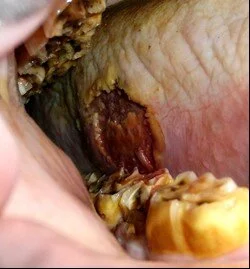
Spirit was treated by Grant Mackinnon of MacKinnon Equine Services and was found to have a 3 x ½ inch open mouth sore from his cheek braising across his molar table. I was told he was likely having headaches from TMJ issues. He'd had his teeth floated by a veterinarian 6 months before seeing Grant.
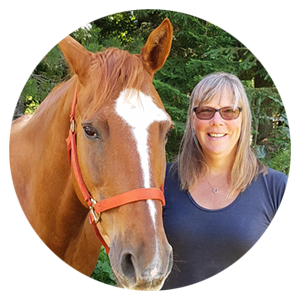
Osteopathically Spirit was found to have a gastric ulcer and hind-gut acidosis. Dr. Taylor freed his gelding restriction which enabled him to use his full back end. He was treated for these and I now have my horse back! I am not dependant on monthly treatments from various modalities, and I am grateful that I left no stone unturned.
Dr. Taylor’s work is cutting edge and completely ahead of modern-day medicine. Her commitment and dedication are amazing and for this, I am extremely grateful! I think Spirit is pretty pleased too. He’s the exuberant model on the home page of this site.

Your go-to paste when your horse’s digestive system needs extra support!
Handy to keep on hand for sudden digestive upsets
Ideal during transport or following surgery
Helps support horses experiencing digestive upset
This highly digestible, concentrated paste helps repopulate beneficial gut microflora during acute digestive upset and can also be used as a loading dose before starting the daily granular supplement.
GO2 is especially useful when horses experience reduced appetite, loose manure or other digestive changes related to stress, illness, competition, travel or other changes in routine. Offer 20ml per day for 8 days as a loading dose.
NOTE: This is the same Equine Choice Prebiotic + Probiotic you know and love, with a new name and packaging.
If you’re looking for the starter pack with 4.2 kg Powder + 3 Tubes of paste you’ll find it HERE.
PRODUCT INFORMATION
Equine Choice Prebiotic + Probiotic paste supplements contains live encapsulated saccharomyces cerevisiae yeast enabling the yeast to make it to the hind-gut to stabilize pH levels for proper fermentation. Equine Choice products contain digestive enzymes and good bacteria. Bacillus bacteria is a heat and acid-tolerant bacteria, which enables it to make it to the hind-gut and has a stable shelf life in the barn setting. The prebiotic portion of the supplement is mannan-oligosaccharide (MOS) a yeast cell wall that works as a toxin binder to help remove toxins from the digestive system and provide nutrients to the probiotic bacteria. Equine Choice supplements also contain B-vitamins, Vitamin E and the Amino Acids L- Glutamine and L-Threonine providing complete digestive health.
Equine Choice Prebiotic + Probiotic supplements survive stomach acid reaching the hind-gut assisting in consistent pH levels and proper hind-gut fermentation resulting in:
Better feed and nutrients intake
Preventing and treating digestive issues such as excessive gas and bloating, diarrhoea
Increased water consumption to prevent dehydration
Improved fibre and starch digestion
Better immune response
Increased performance due to a proper functioning digestive system
INGREDIENTS
Paste: Bacillus and Lactobacillus bacteria, live encapsulated yeast, digestive enzymes, mannan-oligosaccharide, vitamin B pack, L-glutamine, L-threonine, vitamin E, canola oil, and oat flour.
FEEDING GUIDE
Administer 10-20 ml according to body weight orally per day.
10 ml for less than 200 kg. 20 ml for over 200 kg.
Download and print this feeding guide and keep at the barn.
End
See recommendations for use below.
➜ Read about Hindgut Acidosis