

 Image 1 of 1
Handy Hay Nets Medium Bag
The medium size Handy Hay Net Fits 4 to 6 flakes. This size bag is great for portion feeding or a day trip to the riding grounds/arena with your horse. This horse hay net is also fantastic for other animals like small herds of sheep, goats, Llamas or Alpacas.
This bag comes with a hanging ring installed allowing you to hang your net in muddy or snowy conditions. The tie rope comes in black by default, but other colours are available if you prefer.
WHY SLOW FEEDING?
Better for digestion as it slows down the amount animals can consume PER MINUTE but is FREE CHOICE and prevents bloat and colic.
Simulates grazing helping to release endorphins from chewing, which keeps hindgut flora (microbiome) happy and healthy.
Obese horses will eat less but still have access to food all day.
Alleviates the boredom and STRESS that can lead to ulcers, colic in horses, bloat in ruminants AND stops wood chewing, manure eating, etc.
No more bullying in the herd at feeding time. Calmer animals = happier herds!
Slow feeding regulates insulin levels for horses with metabolic syndrome.
Helps prevent choke in horses.
BENEFITS FOR YOU
No more wasted hay.
Save up to 50% in hay costs!
No more rushing home to feed, or getting up at the crack of dawn because animals are hungry and calling!
Your horse is ready to be ridden at any time, saving precious time before a show/event.
Pre-load your Handy Hay Nets so feeding time is quick and easy.
No more pushy/aggressive animals at feeding time.
Need to soak your hay to reduce sugar content? No problem, just fill and submerge.
GETTING STARTED TIPS
When you first introduce animals to slow feeder hay bags, make sure there is loose hay available as well. Never feed a hay bag if your animal is hungry as this will cause stress. We recommend 3/4 of what you would normally feed in addition to the hay bag.
It can take anywhere from a week to a month for animals to really get the hang of eating from our hay nets, but most people find that when they do, they prefer their bags to loose hay!
Hungry animals will often paw or bite through the netting. As they adjust, they use their teeth and lips to pull the hay through the holes.
Don’t pack the bag too tight or they won't be able to get the hay out. Pull some hay through the netting to help them get the idea.
Quick drops in temperature and very cold weather can require your animals to need additional loose hay.
Don’t let your Handy Hay Net run out. Hay becomes harder to get out as the bag empties due to all the broken bits so it’s best to empty out the bag at this point.
Trickle Feeding means having a constant supply of forage available at all times. Trust that your animals will adjust over time and settle into a balanced weight.
If your horse is shod please make sure that they do not contact the net at any time. Put it in a bin or feeder or hang it so they cannot paw it.
End
More helpful information below.
The medium size Handy Hay Net Fits 4 to 6 flakes. This size bag is great for portion feeding or a day trip to the riding grounds/arena with your horse. This horse hay net is also fantastic for other animals like small herds of sheep, goats, Llamas or Alpacas.
This bag comes with a hanging ring installed allowing you to hang your net in muddy or snowy conditions. The tie rope comes in black by default, but other colours are available if you prefer.
WHY SLOW FEEDING?
Better for digestion as it slows down the amount animals can consume PER MINUTE but is FREE CHOICE and prevents bloat and colic.
Simulates grazing helping to release endorphins from chewing, which keeps hindgut flora (microbiome) happy and healthy.
Obese horses will eat less but still have access to food all day.
Alleviates the boredom and STRESS that can lead to ulcers, colic in horses, bloat in ruminants AND stops wood chewing, manure eating, etc.
No more bullying in the herd at feeding time. Calmer animals = happier herds!
Slow feeding regulates insulin levels for horses with metabolic syndrome.
Helps prevent choke in horses.
BENEFITS FOR YOU
No more wasted hay.
Save up to 50% in hay costs!
No more rushing home to feed, or getting up at the crack of dawn because animals are hungry and calling!
Your horse is ready to be ridden at any time, saving precious time before a show/event.
Pre-load your Handy Hay Nets so feeding time is quick and easy.
No more pushy/aggressive animals at feeding time.
Need to soak your hay to reduce sugar content? No problem, just fill and submerge.
GETTING STARTED TIPS
When you first introduce animals to slow feeder hay bags, make sure there is loose hay available as well. Never feed a hay bag if your animal is hungry as this will cause stress. We recommend 3/4 of what you would normally feed in addition to the hay bag.
It can take anywhere from a week to a month for animals to really get the hang of eating from our hay nets, but most people find that when they do, they prefer their bags to loose hay!
Hungry animals will often paw or bite through the netting. As they adjust, they use their teeth and lips to pull the hay through the holes.
Don’t pack the bag too tight or they won't be able to get the hay out. Pull some hay through the netting to help them get the idea.
Quick drops in temperature and very cold weather can require your animals to need additional loose hay.
Don’t let your Handy Hay Net run out. Hay becomes harder to get out as the bag empties due to all the broken bits so it’s best to empty out the bag at this point.
Trickle Feeding means having a constant supply of forage available at all times. Trust that your animals will adjust over time and settle into a balanced weight.
If your horse is shod please make sure that they do not contact the net at any time. Put it in a bin or feeder or hang it so they cannot paw it.
End
More helpful information below.
WHY HANDY HAY NETS?
They are affordable and hand made in the West Kootenays of BC, Canada.
Our seams are hand *sewn, which makes them more flexible and longer-lasting *compared to machine sewn seams.
They are easy to load and tie.
Our tie rope comes in many colours, so each animal can have its own, (handy for barns or boarding facilities).
Our netting is made of strong soft nylon, which is very gentle on muzzles.
There aren't any knots on our bags for animals to grab or chew.
Download and print these pdf guides. Laminate and keep out at the barn for quick reference.
When 2 horses share the same space at all times, we recommend 3 bags. Having the extra bag will encourage movement and will eliminate stress caused by bullying from the dominant animal. This applies mostly to the use of the smaller hay bags (Small Bag size up to the Bale Bag size), but you can always use a variety of bags in an enclosure. Download and print this getting started guide and keep at the barn.
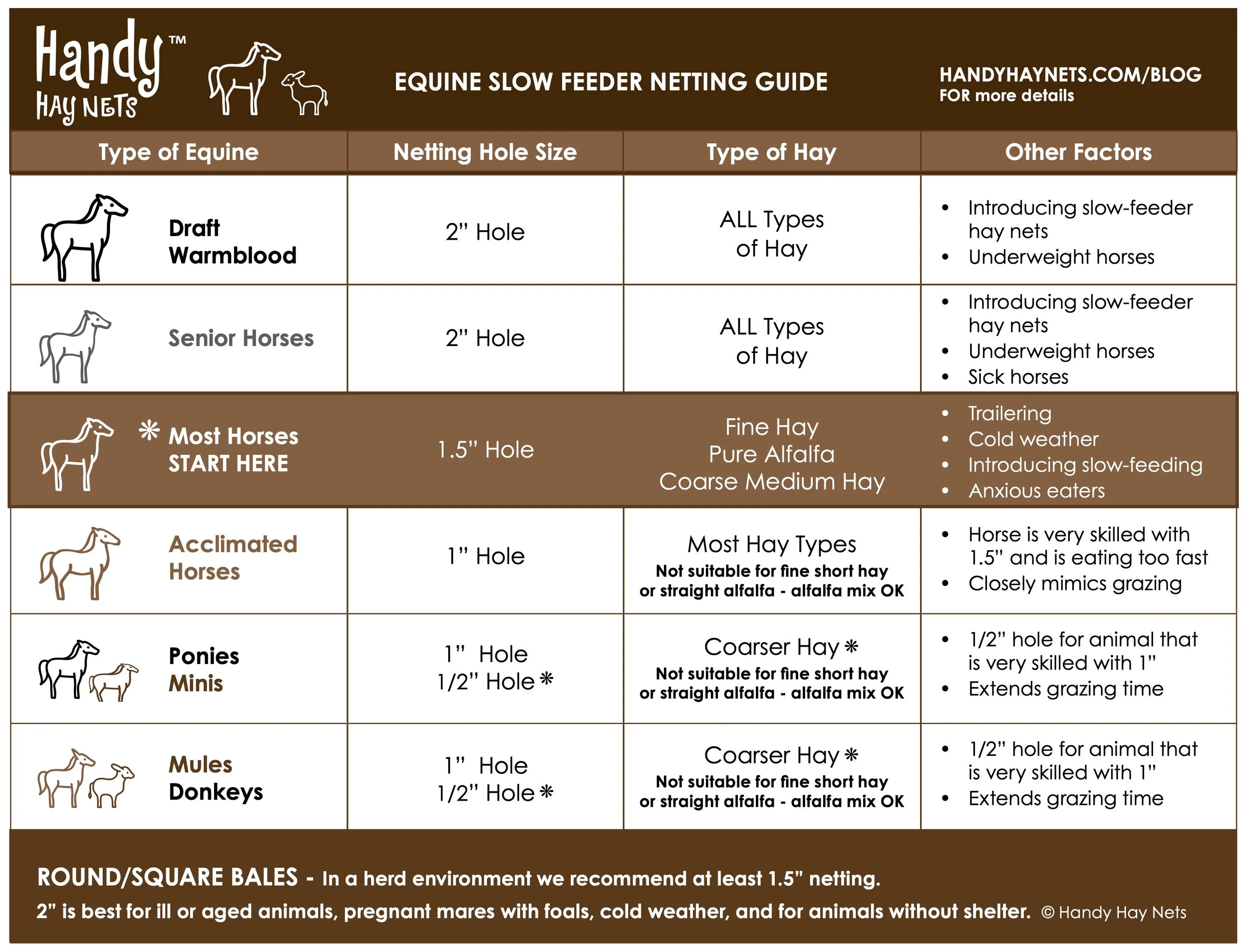
Choosing the right bag for horses.

Choosing the right bag for other animals.
click to enlarge

Handy Hay Nets Getting Started Playlist

This 1” hole size Handy Hay Nets slow feeder bag holds less than one flake of hay. Keep your small animals occupied and happy.
This horse hay net comes with the hanging ring option, allowing you to hang your net in muddy or snowy conditions. The (replaceable) tie rope comes in many colours, so each animal can have its own, (handy for barns or boarding facilities).
WHY SLOW FEEDING?
Better for digestion as it slows down the amount animals can consume PER MINUTE but is FREE CHOICE and prevents bloat and colic.
Simulates grazing helping to release endorphins from chewing, which keeps hindgut flora (microbiome) happy and healthy.
Obese horses will eat less but still have access to food all day.
Alleviates the boredom and STRESS that can lead to ulcers, colic in horses, bloat in ruminants AND stops wood chewing, manure eating, etc.
No more bullying in the herd at feeding time. Calmer animals = happier herds!
Slow feeding regulates insulin levels for horses with metabolic syndrome.
Helps prevent choke in horses.
BENEFITS FOR YOU
No more wasted hay.
Save up to 50% in hay costs!
No more rushing home to feed, or getting up at the crack of dawn because animals are hungry and calling!
Your horse is ready to be ridden at any time, saving precious time before a show/event.
Pre-load your Handy Hay Nets so feeding time is quick and easy.
No more pushy/aggressive animals at feeding time.
Need to soak your hay to reduce sugar content? No problem, just fill and submerge.
GETTING STARTED TIPS
When 2 horses share the same space at all times, we recommend 3 bags. Having the extra bag will encourage movement and will eliminate stress caused by bullying from the dominant animal.
When you first introduce animals to slow feeder hay bags, make sure there is loose hay available as well. Never feed a hay bag if your animal is hungry as this will cause stress. We recommend 3/4 of what you would normally feed in addition to the hay bag.
It can take anywhere from a week to a month for animals to really get the hang of eating from our hay nets, but most people find that when they do, they prefer their bags to loose hay!
Hungry animals will often paw or bite through the netting. As they adjust, they use their teeth and lips to pull the hay through the holes.
Don’t pack the bag too tight or they won't be able to get the hay out. Pull some hay through the netting to help them get the idea.
Quick drops in temperature and very cold weather can require your animals to need additional loose hay.
Don’t let your Handy Hay Net run out. Hay becomes harder to get out as the bag empties due to all the broken bits so it’s best to empty out the bag at this point.
Trickle Feeding means having a constant supply of forage available at all times. Trust that your animals will adjust over time and settle into a balanced weight.
If your horse is shod please make sure that they do not contact the net at any time. Put it in a bin or feeder or hang it so they cannot paw it.
End
More helpful information below.

This Trailer Size slow feed bag holds 1-2 flakes and is perfect for hard to keep ponies, minis and mini donkeys and dwarf goats. This size bag is also great for travelling or when you want to have multiple feeding stations set up around the property to keep your animals moving.
This horse hay net comes with a hanging ring installed, allowing you to hang your bag in muddy or snowy conditions. The tie rope comes in black by default, but other colours are available if you prefer.
WHY SLOW FEEDING?
Better for digestion as it slows down the amount animals can consume PER MINUTE but is FREE CHOICE and prevents bloat and colic.
Simulates grazing helping to release endorphins from chewing, which keeps hindgut flora (microbiome) happy and healthy.
Obese horses will eat less but still have access to food all day.
Alleviates the boredom and STRESS that can lead to ulcers, colic in horses, bloat in ruminants AND stops wood chewing, manure eating, etc.
No more bullying in the herd at feeding time. Calmer animals = happier herds!
Slow feeding regulates insulin levels for horses with metabolic syndrome.
Helps prevent choke in horses.
BENEFITS FOR YOU
No more wasted hay.
Save up to 50% in hay costs!
No more rushing home to feed, or getting up at the crack of dawn because animals are hungry and calling!
Your horse is ready to be ridden at any time, saving precious time before a show/event.
Pre-load your Handy Hay Nets so feeding time is quick and easy.
No more pushy/aggressive animals at feeding time.
Need to soak your hay to reduce sugar content? No problem, just fill and submerge.
GETTING STARTED TIPS
When 2 horses share the same space at all times, we recommend 3 bags. Having the extra bag will encourage movement and will eliminate stress caused by bullying from the dominant animal.
When you first introduce animals to slow feeder hay bags, make sure there is loose hay available as well. Never feed a hay bag if your animal is hungry as this will cause stress. We recommend 3/4 of what you would normally feed in addition to the hay bag.
It can take anywhere from a week to a month for animals to really get the hang of eating from our hay nets, but most people find that when they do, they prefer their bags to loose hay!
Hungry animals will often paw or bite through the netting. As they adjust, they use their teeth and lips to pull the hay through the holes.
Don’t pack the bag too tight or they won't be able to get the hay out. Pull some hay through the netting to help them get the idea.
Quick drops in temperature and very cold weather can require your animals to need additional loose hay.
Don’t let your Handy Hay Net run out. Hay becomes harder to get out as the bag empties due to all the broken bits so it’s best to empty out the bag at this point.
Trickle Feeding means having a constant supply of forage available at all times. Trust that your animals will adjust over time and settle into a balanced weight.
If your horse is shod please make sure that they do not contact the net at any time. Put it in a bin or feeder or hang it so they cannot paw it.
End
More helpful information below.

The medium size Handy Hay Net Fits 4 to 6 flakes. This size bag is great for portion feeding or a day trip to the riding grounds/arena with your horse. This horse hay net is also fantastic for other animals like small herds of sheep, goats, Llamas or Alpacas.
This bag comes with a hanging ring installed allowing you to hang your net in muddy or snowy conditions. The tie rope comes in black by default, but other colours are available if you prefer.
WHY SLOW FEEDING?
Better for digestion as it slows down the amount animals can consume PER MINUTE but is FREE CHOICE and prevents bloat and colic.
Simulates grazing helping to release endorphins from chewing, which keeps hindgut flora (microbiome) happy and healthy.
Obese horses will eat less but still have access to food all day.
Alleviates the boredom and STRESS that can lead to ulcers, colic in horses, bloat in ruminants AND stops wood chewing, manure eating, etc.
No more bullying in the herd at feeding time. Calmer animals = happier herds!
Slow feeding regulates insulin levels for horses with metabolic syndrome.
Helps prevent choke in horses.
BENEFITS FOR YOU
No more wasted hay.
Save up to 50% in hay costs!
No more rushing home to feed, or getting up at the crack of dawn because animals are hungry and calling!
Your horse is ready to be ridden at any time, saving precious time before a show/event.
Pre-load your Handy Hay Nets so feeding time is quick and easy.
No more pushy/aggressive animals at feeding time.
Need to soak your hay to reduce sugar content? No problem, just fill and submerge.
GETTING STARTED TIPS
When you first introduce animals to slow feeder hay bags, make sure there is loose hay available as well. Never feed a hay bag if your animal is hungry as this will cause stress. We recommend 3/4 of what you would normally feed in addition to the hay bag.
It can take anywhere from a week to a month for animals to really get the hang of eating from our hay nets, but most people find that when they do, they prefer their bags to loose hay!
Hungry animals will often paw or bite through the netting. As they adjust, they use their teeth and lips to pull the hay through the holes.
Don’t pack the bag too tight or they won't be able to get the hay out. Pull some hay through the netting to help them get the idea.
Quick drops in temperature and very cold weather can require your animals to need additional loose hay.
Don’t let your Handy Hay Net run out. Hay becomes harder to get out as the bag empties due to all the broken bits so it’s best to empty out the bag at this point.
Trickle Feeding means having a constant supply of forage available at all times. Trust that your animals will adjust over time and settle into a balanced weight.
If your horse is shod please make sure that they do not contact the net at any time. Put it in a bin or feeder or hang it so they cannot paw it.
End
More helpful information below.
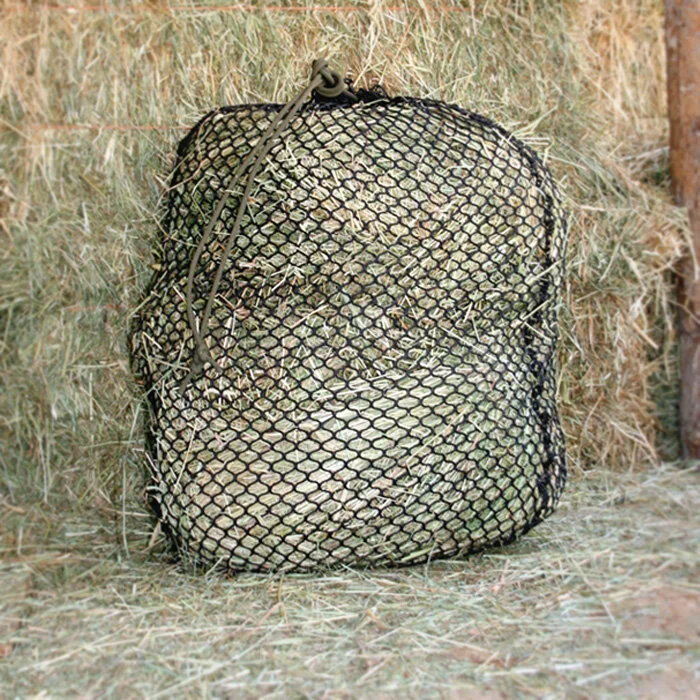
The large size handy hay net holds 8-10 flakes or a small 50lb bale. Gone all day? This bag is perfect for your horses. For other farm animals, it’s great for a small herd AND you may not need to feed for a few days.
This horse hay net comes with a hanging ring installed, allowing you to hang your bags in muddy or snowy conditions. The tie rope comes in black by default, but other colours are available if you prefer. View the Replacement Rope here.
WHY SLOW FEEDING?
Better for digestion as it slows down the amount animals can consume PER MINUTE but is FREE CHOICE and prevents bloat and colic.
Simulates grazing helping to release endorphins from chewing, which keeps hindgut flora (microbiome) happy and healthy.
Obese horses will eat less but still have access to food all day.
Alleviates the boredom and STRESS that can lead to ulcers, colic in horses, bloat in ruminants AND stops wood chewing, manure eating, etc.
No more bullying in the herd at feeding time. Calmer animals = happier herds!
Slow feeding regulates insulin levels for horses with metabolic syndrome.
Helps prevent choke in horses.
BENEFITS FOR YOU
No more wasted hay.
Save up to 50% in hay costs!
No more rushing home to feed, or getting up at the crack of dawn because animals are hungry and calling!
Your horse is ready to be ridden at any time, saving precious time before a show/event.
Pre-load your Handy Hay Nets so feeding time is quick and easy.
No more pushy/aggressive animals at feeding time.
Need to soak your hay to reduce sugar content? No problem, just fill and submerge.
GETTING STARTED TIPS
When 2 horses share the same space at all times, we recommend 3 bags. Having the extra bag will encourage movement and will eliminate stress caused by bullying from the dominant animal.
When you first introduce animals to slow feeder hay bags, make sure there is loose hay available as well. Never feed a hay bag if your animal is hungry as this will cause stress. We recommend 3/4 of what you would normally feed in addition to the hay bag.
It can take anywhere from a week to a month for animals to really get the hang of eating from our hay nets, but most people find that when they do, they prefer their bags to loose hay!
Hungry animals will often paw or bite through the netting. As they adjust, they use their teeth and lips to pull the hay through the holes.
Don’t pack the bag too tight or they won't be able to get the hay out. Pull some hay through the netting to help them get the idea.
Quick drops in temperature and very cold weather can require your animals to need additional loose hay.
Don’t let your Handy Hay Net run out. Hay becomes harder to get out as the bag empties due to all the broken bits so it’s best to empty out the bag at this point.
Trickle Feeding means having a constant supply of forage available at all times. Trust that your animals will adjust over time and settle into a balanced weight.
If your horse is shod please make sure that they do not contact the net at any time. Put it in a bin or feeder or hang it so they cannot paw it.
End
More helpful information below.

This slow feeder bale bag fits 75-90lb bales and is the BEST CHOICE for offering TRUE Free Choice slow feeding for all animals. Make sure to measure your bales before choosing a size!
For horses (1000lb +) you’ll have to refill this bag approximately every 2 & 1/2 days. Very practical for your weekends away from home. It also works great for larger herds of small farm animals and will reduce your workload! You may only have to refill once a week.
This horse hay net comes with a hanging ring installed allowing you to hang your net in muddy or snowy conditions. The tie rope comes in black by default, but other colours are available if you prefer.
WHY SLOW FEEDING?
Better for digestion as it slows down the amount animals can consume PER MINUTE but is FREE CHOICE and prevents bloat and colic.
Simulates grazing helping to release endorphins from chewing, which keeps hindgut flora (microbiome) happy and healthy.
Obese horses will eat less but still have access to food all day.
Alleviates the boredom and STRESS that can lead to ulcers, colic in horses, bloat in ruminants AND stops wood chewing, manure eating, etc.
No more bullying in the herd at feeding time. Calmer animals = happier herds!
Slow feeding regulates insulin levels for horses with metabolic syndrome.
Helps prevent choke in horses.
BENEFITS FOR YOU
No more wasted hay.
Save up to 50% in hay costs!
No more rushing home to feed, or getting up at the crack of dawn because animals are hungry and calling!
Your horse is ready to be ridden at any time, saving precious time before a show/event.
Pre-load your Handy Hay Nets so feeding time is quick and easy.
No more pushy/aggressive animals at feeding time.
Need to soak your hay to reduce sugar content? No problem, just fill and submerge.
GETTING STARTED TIPS
When 2 horses share the same space at all times, we recommend 3 bags. Having the extra bag will encourage movement and will eliminate stress caused by bullying from the dominant animal.
When you first introduce animals to slow feeder hay bags, make sure there is loose hay available as well. Never feed a hay bag if your animal is hungry as this will cause stress. We recommend 3/4 of what you would normally feed in addition to the hay bag.
It can take anywhere from a week to a month for animals to really get the hang of eating from our hay nets, but most people find that when they do, they prefer their bags to loose hay!
Hungry animals will often paw or bite through the netting. As they adjust, they use their teeth and lips to pull the hay through the holes.
Don’t pack the bag too tight or they won't be able to get the hay out. Pull some hay through the netting to help them get the idea.
Quick drops in temperature and very cold weather can require your animals to need additional loose hay.
Don’t let your Handy Hay Net run out. Hay becomes harder to get out as the bag empties due to all the broken bits so it’s best to empty out the bag at this point.
Trickle Feeding means having a constant supply of forage available at all times. Trust that your animals will adjust over time and settle into a balanced weight.
If your horse is shod please make sure that they do not contact the net at any time. Put it in a bin or feeder or hang it so they cannot paw it.
End
More helpful information below.
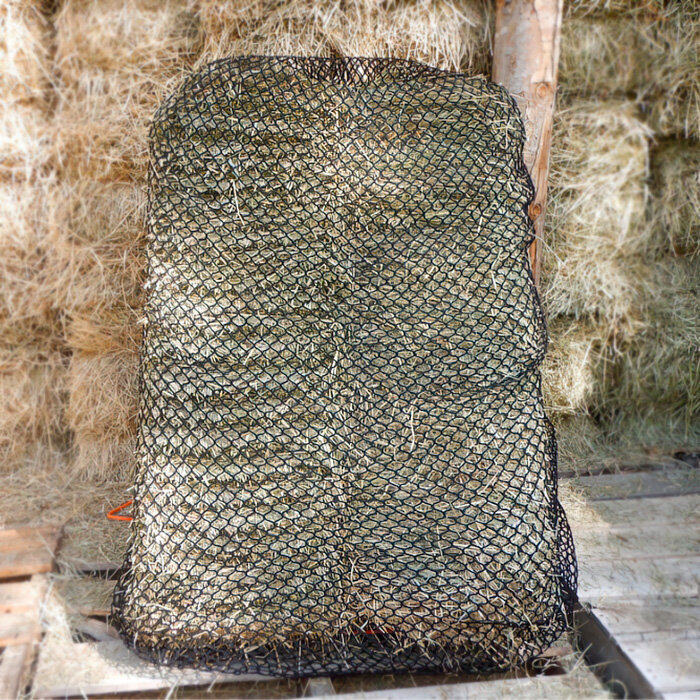
Make sure to measure your bales before choosing a size! This horse hay net fits up to a 140lbs 3-string bale or two 2-string bales of a max of 90lbs each.
This 1” net bale bag represents true Free Choice slow feeding for all animals. It's great as well for a weekend away from home camping or at the shows, and for an overnight stay with a few horses.
This Handy Hay Nets bag comes with a hanging ring installed allowing you to hang your net in muddy or snowy conditions. The tie rope comes in black by default, but other colours are available if you prefer.
WHY SLOW FEEDING?
Better for digestion as it slows down the amount animals can consume PER MINUTE but is FREE CHOICE and prevents bloat and colic.
Simulates grazing helping to release endorphins from chewing, which keeps hindgut flora (microbiome) happy and healthy.
Obese horses will eat less but still have access to food all day.
Alleviates the boredom and STRESS that can lead to ulcers, colic in horses, bloat in ruminants AND stops wood chewing, manure eating, etc.
No more bullying in the herd at feeding time. Calmer animals = happier herds!
Slow feeding regulates insulin levels for horses with metabolic syndrome.
Helps prevent choke in horses.
BENEFITS FOR YOU
No more wasted hay.
Save up to 50% in hay costs!
No more rushing home to feed, or getting up at the crack of dawn because animals are hungry and calling!
Your horse is ready to be ridden at any time, saving precious time before a show/event.
Pre-load your Handy Hay Nets so feeding time is quick and easy.
No more pushy/aggressive animals at feeding time.
Need to soak your hay to reduce sugar content? No problem, just fill and submerge.
GETTING STARTED TIPS
When 2 horses share the same space at all times, we recommend 3 bags. Having the extra bag will encourage movement and will eliminate stress caused by bullying from the dominant animal.
When you first introduce animals to slow feeder hay bags, make sure there is loose hay available as well. Never feed a hay bag if your animal is hungry as this will cause stress. We recommend 3/4 of what you would normally feed in addition to the hay bag.
It can take anywhere from a week to a month for animals to really get the hang of eating from our hay nets, but most people find that when they do, they prefer their bags to loose hay!
Hungry animals will often paw or bite through the netting. As they adjust, they use their teeth and lips to pull the hay through the holes.
Don’t pack the bag too tight or they won't be able to get the hay out. Pull some hay through the netting to help them get the idea.
Quick drops in temperature and very cold weather can require your animals to need additional loose hay.
Don’t let your Handy Hay Net run out. Hay becomes harder to get out as the bag empties due to all the broken bits so it’s best to empty out the bag at this point.
Trickle Feeding means having a constant supply of forage available at all times. Trust that your animals will adjust over time and settle into a balanced weight.
If your horse is shod please make sure that they do not contact the net at any time. Put it in a bin or feeder or hang it so they cannot paw it.
End
More helpful information below.
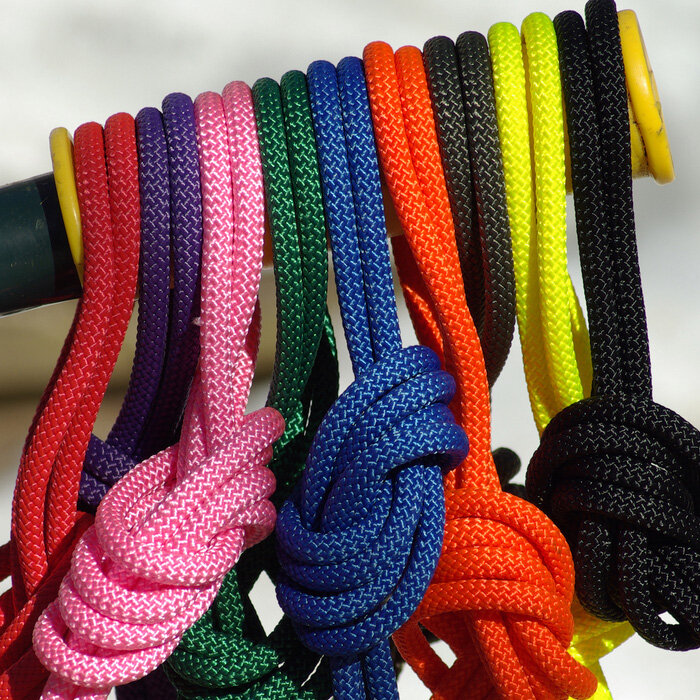
This replacement rope is easy to tie even in cold weather!
We've got LOTS of colours to choose from: red, orange, yellow, green, olive, blue, purple, pink, and black. Each horse can have their own colour which is great for boarding facilities and barns.

Keep a 1/4 pound roll of Handy Hay Nets repair twine around the farm and you'll have plenty of twine for repairing your bags should your animals chew through the netting of your bags.
See the guides below to ensure you’re using the appropriate bag and netting size for your animals.
This slow feeder hay bag fits up to four 90lb bales or two 3-string bales. For two horses 1000lb and up you will need to refill this bag approximately every 4 days.
Available in 1.0", 1.5" and 2" netting sizes. This horse hay net comes with a hanging ring installed so you can secure it to keep it from getting soiled.
How to load: You will need to bring your 4 bales to the location you wish to place the bag. Simply put your 4 bales standing up and slip the bag over, tie and push it over. The tie rope comes in black by default, but other colours are available if you prefer. View the Replacement Rope here.
WHY SLOW FEEDING?Better for digestion as it slows down the amount animals can consume PER MINUTE but is FREE CHOICE and prevents bloat and colic.
Simulates grazing helping to release endorphins from chewing, which keeps hindgut flora (microbiome) happy and healthy.
Obese horses will eat less but still have access to food all day.
Alleviates the boredom and STRESS that can lead to ulcers, colic in horses, bloat in ruminants AND stops wood chewing, manure eating, etc.
No more bullying in the herd at feeding time. Calmer animals = happier herds!
Slow feeding regulates insulin levels for horses with metabolic syndrome.
Helps prevent choke in horses.
BENEFITS FOR YOUNo more wasted hay.
Save up to 50% in hay costs!
No more rushing home to feed, or getting up at the crack of dawn because animals are hungry and calling!
Your horse is ready to be ridden at any time, saving precious time before a show/event.
Pre-load your Handy Hay Nets so feeding time is quick and easy.
No more pushy/aggressive animals at feeding time.
Need to soak your hay to reduce sugar content? No problem, just fill and submerge.
GETTING STARTED TIPSWhen 2 horses share the same space at all times, we recommend 3 bags. Having the extra bag will encourage movement and will eliminate stress caused by bullying from the dominant animal.
When you first introduce animals to slow feeder hay bags, make sure there is loose hay available as well. Never feed a hay bag if your animal is hungry as this will cause stress. We recommend 3/4 of what you would normally feed in addition to the hay bag.
It can take anywhere from a week to a month for animals to really get the hang of eating from our hay nets, but most people find that when they do, they prefer their bags to loose hay!
Hungry animals will often paw or bite through the netting. As they adjust, they use their teeth and lips to pull the hay through the holes.
Don’t pack the bag too tight or they won't be able to get the hay out. Pull some hay through the netting to help them get the idea.
Quick drops in temperature and very cold weather can require your animals to need additional loose hay.
Don’t let your Handy Hay Net run out. Hay becomes harder to get out as the bag empties due to all the broken bits so it’s best to empty out the bag at this point.
Trickle Feeding means having a constant supply of forage available at all times. Trust that your animals will adjust over time and settle into a balanced weight.
If your horse is shod please make sure that they do not contact the net at any time. Put it in a bin or feeder or hang it so they cannot paw it.
End
More helpful information below.